

Growing your own vegetables doesn’t have to mean spending hours each week tending to your plot. The secret lies in making smart choices from the outset and implementing strategies that allow nature to do much of the work for you. Successful low-maintenance gardeners understand that a well-planned vegetable patch can provide fresh produce without demanding constant attention. By focusing on the right plants, techniques, and tools, anyone can create a productive garden that fits comfortably into a busy lifestyle.
Choosing easy-to-grow vegetables
Selecting resilient crop varieties
The foundation of any low-maintenance vegetable garden begins with choosing crops that naturally require minimal intervention. Certain vegetables have evolved to thrive with little fuss, making them ideal candidates for time-pressed gardeners. Beans, for instance, fix their own nitrogen and require minimal feeding once established. Similarly, radishes grow rapidly and rarely suffer from pest problems, whilst courgettes produce abundantly with little more than regular watering.
Consider these particularly forgiving vegetables for your plot:
- Salad leaves such as rocket and mizuna that regrow after cutting
- Root vegetables like carrots and beetroot that tolerate neglect
- Perennial crops including asparagus and rhubarb that return year after year
- Hardy brassicas such as kale that withstand various weather conditions
Avoiding high-maintenance varieties
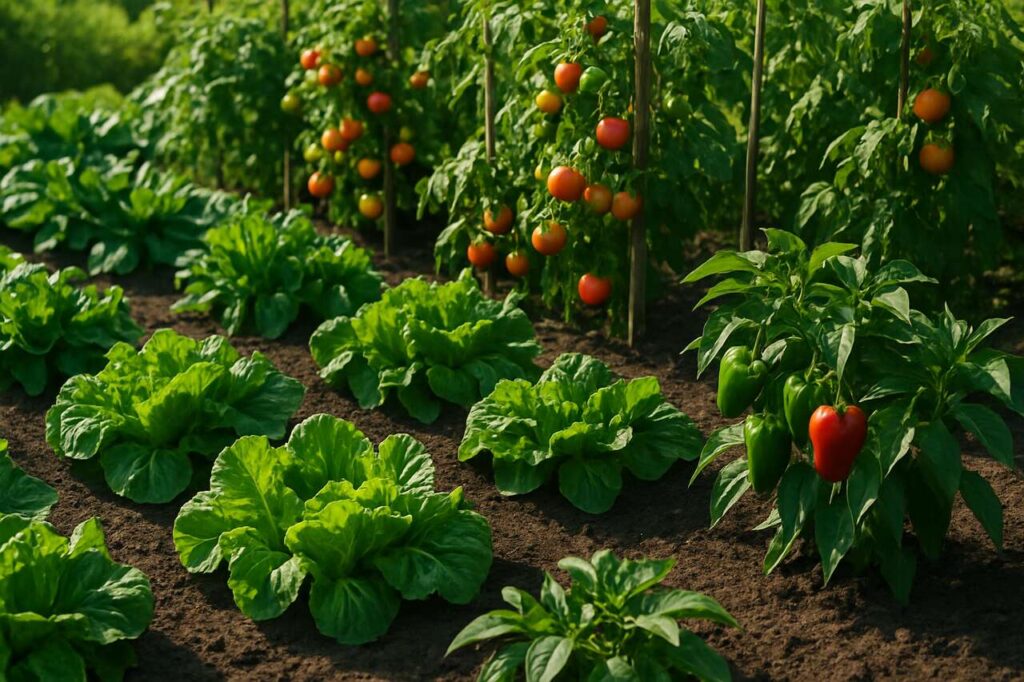
Equally important is knowing which vegetables to avoid if your time is limited. Tomatoes, whilst rewarding, typically require regular feeding, pruning, and support. Cucumbers demand consistent moisture levels and careful pest management. By steering clear of these more demanding crops initially, you can build confidence and success with varieties that practically look after themselves.
Understanding which plants suit your available time naturally leads to considering how you’ll care for them throughout the growing season.
Using simple gardening techniques
Preparing soil properly from the start
Investing effort in soil preparation before planting pays dividends throughout the growing season. Adding well-rotted compost or composted organic matter creates a nutrient-rich foundation that supports plant growth without the need for frequent feeding. This initial work establishes an environment where vegetables can access the resources they need independently, reducing your ongoing workload considerably.
Healthy soil structure also improves drainage and water retention, meaning plants suffer less stress during dry spells or heavy rain. This resilience translates directly into less time spent addressing problems and more time enjoying the harvest.
Adopting no-dig methods
The no-dig approach has revolutionised low-maintenance gardening by eliminating the need for annual digging and turning. By simply adding compost layers to the surface each season, you preserve soil structure, protect beneficial organisms, and suppress weeds naturally. This technique requires significantly less physical effort whilst actually improving soil health over time.
| Traditional Method | No-Dig Method |
|---|---|
| Annual digging required | Surface composting only |
| Disrupts soil life | Preserves ecosystem |
| Brings weed seeds up | Suppresses weeds naturally |
| Time-intensive | Minimal effort |
Once your soil is properly prepared and your growing method established, attention turns to the ongoing care your vegetables will need.
Optimising watering and maintenance
Installing efficient irrigation systems
Manual watering can consume considerable time, especially during summer months. Drip irrigation systems or soaker hoses deliver water directly to plant roots, reducing waste and ensuring consistent moisture levels. These systems can be connected to timers, effectively automating one of gardening’s most time-consuming tasks.
For those preferring simpler solutions, self-watering containers or installing water-retaining granules in the soil can extend the time between watering sessions significantly. The goal is creating conditions where plants receive adequate moisture without daily intervention.
Grouping plants by water needs
Organising your vegetable plot according to water requirements streamlines maintenance considerably. Thirsty crops like lettuce and celery can be grouped together, whilst drought-tolerant vegetables such as squash and beans occupy drier areas. This zoning approach means you can target watering efforts efficiently rather than treating the entire garden uniformly.
Strategic watering practices work hand-in-hand with another essential element that dramatically reduces garden maintenance.
Choosing mulching to reduce weeds
Understanding mulch benefits
Perhaps no single technique offers more benefits for less effort than mulching. A layer of organic material spread across the soil surface performs multiple functions simultaneously: it suppresses weed growth, retains soil moisture, regulates temperature, and gradually breaks down to feed the soil. This multitasking approach addresses several maintenance challenges with one simple action.
Quality mulches enriched with nutrients and beneficial microbes provide additional advantages by improving soil structure and drainage over time. The initial application requires some effort, but the reduction in weeding and watering throughout the season more than compensates for this investment.
Selecting appropriate mulching materials
Different mulching materials suit various situations and budgets:
- Straw or hay: lightweight, affordable, and effective for annual vegetables
- Wood chips: long-lasting and excellent for pathways and perennial areas
- Compost: adds nutrients whilst suppressing weeds
- Cardboard: free and highly effective for establishing new beds
- Grass clippings: readily available but best used in thin layers
The key is maintaining a layer approximately 5-10 centimetres thick, which prevents light reaching weed seeds whilst allowing water to penetrate. Topping up mulch annually keeps it effective and ensures your garden remains largely weed-free with minimal effort.
With weeds controlled and watering optimised, the physical layout of your garden becomes the next consideration for minimising maintenance.
Smart space planning
Starting small and manageable
Enthusiasm often leads new gardeners to create plots far larger than they can comfortably maintain. A compact, well-tended garden produces more satisfaction and better yields than an overgrown, neglected larger space. Beginning with a modest area allows you to master low-maintenance techniques before expanding, ensuring success rather than overwhelm.
Consider starting with just 2-3 square metres dedicated to a few reliable crops. This manageable approach lets you understand the time commitment required and adjust accordingly before committing to a larger plot.
Designing for accessibility
Thoughtful layout reduces maintenance time significantly. Raised beds eliminate the need for bending and improve drainage, whilst permanent pathways prevent soil compaction and reduce mud. Ensuring all areas can be reached comfortably without stepping on growing areas means you can plant densely without creating access problems.
Strategic planning also involves positioning frequently harvested crops near the house and grouping plants with similar requirements together. This logical organisation minimises unnecessary journeys and makes garden tasks more efficient.
Even the best-planned garden benefits from having the right equipment readily available.
Using handy tools and accessories
Investing in quality essentials
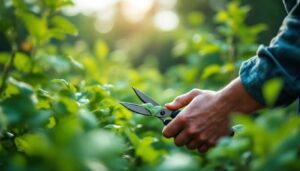
A small collection of reliable tools makes gardening tasks quicker and more pleasant. Rather than accumulating numerous gadgets, focus on versatile, well-made items that will last. A sturdy trowel, sharp secateurs, a comfortable hoe, and a quality watering can cover most basic needs without cluttering your shed.
Tools designed specifically for low-maintenance gardening include long-handled weeders that eliminate bending, oscillating hoes that slice through weeds with minimal effort, and ergonomic designs that reduce strain. Investing in comfort and efficiency pays dividends when time is precious.
Utilising labour-saving accessories
Beyond basic tools, certain accessories can transform your gardening experience:
- Garden kneelers or foam pads that protect joints during planting
- Harvest baskets that keep both hands free whilst collecting produce
- Plant labels that eliminate guesswork about what’s growing where
- Storage solutions that keep tools organised and accessible
These simple additions may seem minor, but collectively they remove friction from gardening tasks, making it more likely you’ll maintain regular, brief sessions rather than avoiding the garden until problems accumulate.
A truly low-maintenance vegetable garden emerges from combining all these elements into a cohesive system. By selecting resilient crops, preparing soil thoroughly at the outset, implementing efficient watering strategies, maintaining mulch layers, planning space intelligently, and equipping yourself with appropriate tools, you create an environment where vegetables thrive with minimal intervention. The secret lies not in finding shortcuts, but in making strategic decisions that allow natural processes to work in your favour. This approach transforms vegetable growing from a demanding hobby into an achievable pleasure that fits comfortably alongside other commitments whilst still delivering fresh, homegrown produce throughout the season.