
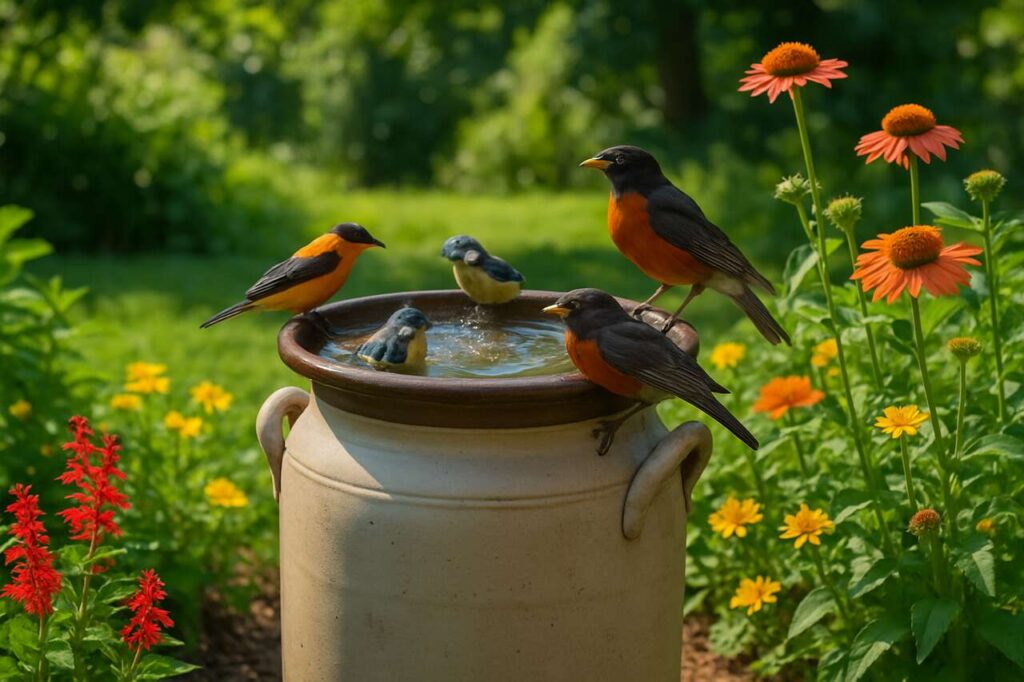
Transforming forgotten household items into functional garden features has become an increasingly popular way to combine sustainability with creativity. An old crock, whether it’s a chipped ceramic vessel or a weathered terracotta pot, offers remarkable potential as a centrepiece that not only enhances your outdoor space but also provides vital resources for local wildlife. By repurposing such items into bird-friendly features, gardeners can create welcoming havens that attract feathered visitors whilst reducing waste and celebrating the beauty of imperfection.
Repurpose an old crock into a bird haven
Understanding the benefits of crock transformation
Converting an old crock into a bird haven serves multiple purposes that extend beyond simple decoration. Birds require consistent access to fresh water for drinking and bathing, particularly during hot summer months or periods of drought. A strategically placed crock filled with water becomes an essential resource that supports local bird populations whilst adding character to your garden. This approach also prevents usable items from ending up in landfills, embodying the principles of sustainable living.
Selecting the appropriate crock
Not every old vessel will suit this purpose equally well. When choosing a crock for transformation, consider the following characteristics:
- Structural integrity despite cosmetic imperfections such as chips or fading
- Adequate depth to hold sufficient water without being too deep for smaller birds
- Material composition, with terracotta and ceramic being ideal choices
- Size appropriate to your garden space and the bird species in your area
- Weight sufficient to prevent tipping during windy conditions
A crock with minor cracks or discolouration can actually enhance its rustic appeal whilst remaining perfectly functional. The patina developed over years of use adds authentic charm that new garden features cannot replicate.
Preparing your crock for its new purpose
Proper preparation ensures your bird haven remains safe and attractive. Begin by thoroughly cleaning the crock using warm water and a stiff brush, avoiding harsh chemicals that might leave harmful residues. If the crock previously contained food or other substances, multiple rinses may be necessary. For crocks that will serve as bird baths, consider whether drainage is necessary; some gardeners prefer sealed bases to maintain water levels, whilst others drill small holes to prevent stagnation.
Once you’ve established the functional aspects of your crock, you can begin considering where it will have the greatest impact in your garden.
Tips for choosing the right spot in the garden
Evaluating visibility and accessibility
The location of your bird haven significantly influences how frequently it will be visited. Birds prefer areas where they can approach cautiously and retreat quickly if threatened. Position your crock where it offers clear sightlines in multiple directions, allowing birds to spot potential predators. A distance of approximately two to three metres from dense shrubs provides an ideal balance, giving birds nearby cover without creating hiding spots for cats or other hunters.
Considering environmental factors
Several environmental elements affect the suitability of a location:
| Factor | Ideal Condition | Reason |
|---|---|---|
| Sunlight | Partial shade | Prevents water from becoming too warm and reduces algae growth |
| Ground stability | Level, firm surface | Ensures the crock remains upright and accessible |
| Height | 15-30 cm above ground | Deters ground predators whilst remaining accessible |
| Wind exposure | Sheltered position | Reduces water evaporation and keeps birds comfortable |
Proximity to observation points
Positioning your bird haven within view of windows or seating areas allows you to enjoy watching visiting birds without disturbing them. However, ensure the crock isn’t placed too close to reflective glass surfaces, which can confuse birds and lead to collisions. A distance of at least five metres from large windows strikes an appropriate balance between observation opportunities and bird safety.
With the perfect location identified, you can focus on the practical transformation process.
Steps to transform a crock into a bird bath
Creating a stable foundation
Stability forms the cornerstone of a successful bird bath installation. Begin by selecting a base that elevates the crock to an appropriate height. Options include stacked bricks, a tree stump, or purpose-built garden pedestals. Ensure the base is level by using a spirit level and adjusting as necessary. For added security, you might apply exterior-grade adhesive between the crock and its support, though this reduces portability for seasonal adjustments.
Optimising water depth and accessibility
Birds of different sizes require varying water depths. Most species prefer shallow water, typically between two and five centimetres deep. If your crock is particularly deep, consider these solutions:
- Place large, flat stones at the bottom to reduce effective depth
- Add a layer of clean gravel to create graduated depths
- Position a smaller, inverted terracotta pot inside to raise the water level
- Include sloping stones or branches to provide easy entry and exit points
These modifications ensure that even smaller bird species can safely use the bath without risk of drowning.
Enhancing grip and comfort
Smooth ceramic surfaces can be slippery when wet. Improve traction by adding textured elements such as river pebbles or rough stones arranged across the bottom. This not only provides better footing but also creates visual interest and helps keep the water cleaner by preventing debris from settling directly on the crock surface.
Beyond these functional considerations, personalisation allows your bird bath to reflect your individual style.
Advice for personalising your bird bath
Decorative embellishments that serve dual purposes
Personalisation need not compromise functionality. Consider additions that enhance both aesthetic appeal and practical value. Surrounding the crock with native flowering plants creates a naturalistic setting whilst providing nectar sources for insects that many birds feed upon. Small aquatic plants in separate containers nearby can offer additional perching spots and contribute to a cohesive garden design.
Artistic touches using reclaimed materials
Embrace the repurposing theme by incorporating other salvaged items into your design. Broken tile pieces can be arranged around the crock’s base as a decorative mosaic. Weathered wood pieces might serve as perches or directional markers. Even fragments from other damaged crocks can be embedded in surrounding soil to create artistic borders that tie the feature into your broader garden aesthetic.
Seasonal adaptations
Your bird haven can evolve throughout the year. During warmer months, floating flower petals or leaves on the water surface provides landing platforms for nervous birds. In autumn, surrounding the crock with seasonal foliage maintains visual interest. Winter might call for a heated element to prevent freezing, though this requires careful consideration of electrical safety in outdoor environments.
Once your personalised bird bath is established, attention turns to attracting diverse visitors.
Attracting different bird species to your garden
Understanding species-specific preferences
Different birds exhibit varying behaviours around water sources. Smaller species such as blue tits and robins prefer shallow edges where they can wade cautiously. Larger birds including blackbirds and thrushes are more confident and will use deeper sections. By creating graduated depths within your crock, you accommodate this range of preferences and increase the diversity of visitors.
Complementary garden features
A bird bath functions most effectively as part of an integrated habitat. Consider these additional elements:
- Native berry-producing shrubs for natural food sources
- Dense hedging or evergreen plants for nesting sites
- Insect-friendly flowers to support the food chain
- Varied perching heights using trees, posts, and structures
- Quiet areas free from excessive human activity
Timing and patience
Birds may not discover your new feature immediately. It can take several weeks for local populations to recognise and trust a new water source. Maintain consistent water levels and cleanliness during this establishment period. Once a few pioneer birds begin using the bath, others typically follow, as many species learn from observing their neighbours’ successful foraging behaviours.
Sustaining this success requires ongoing attention to maintenance.
Maintaining your bird haven
Regular cleaning protocols
Hygiene is paramount for bird health. Empty and refill the crock with fresh water every two to three days during warm weather, or whenever the water appears cloudy. Weekly scrubbing with a stiff brush removes algae and biofilm. Avoid detergents; hot water and physical scrubbing prove sufficient for most cleaning needs. During peak usage periods, daily water changes may be necessary to prevent disease transmission between visiting birds.
Monitoring for damage and wear
Periodically inspect your crock for developing cracks or chips that might worsen over time. Temperature fluctuations, particularly freeze-thaw cycles, can exacerbate existing weaknesses. If damage progresses to the point where the vessel no longer holds water effectively, it might be time to source another reclaimed crock or repair the existing one using appropriate sealants designed for outdoor water features.
Seasonal considerations
Maintenance requirements shift with the seasons. Summer demands more frequent refilling due to evaporation. Autumn brings falling leaves that require regular removal to prevent water contamination. Winter in colder climates may necessitate either removing the crock to prevent frost damage or implementing heating solutions to maintain liquid water when birds need it most.
By transforming an old crock into a bird haven, you create a garden feature that combines environmental responsibility with practical wildlife support. The careful selection of location, thoughtful preparation, and personalised touches result in an attractive focal point that serves both aesthetic and ecological purposes. Regular maintenance ensures your repurposed vessel continues providing essential resources for local bird populations whilst adding distinctive character to your outdoor space. This simple act of creative reuse demonstrates how discarded items can gain new purpose, benefiting wildlife and enriching your connection to the natural world that shares your garden.