



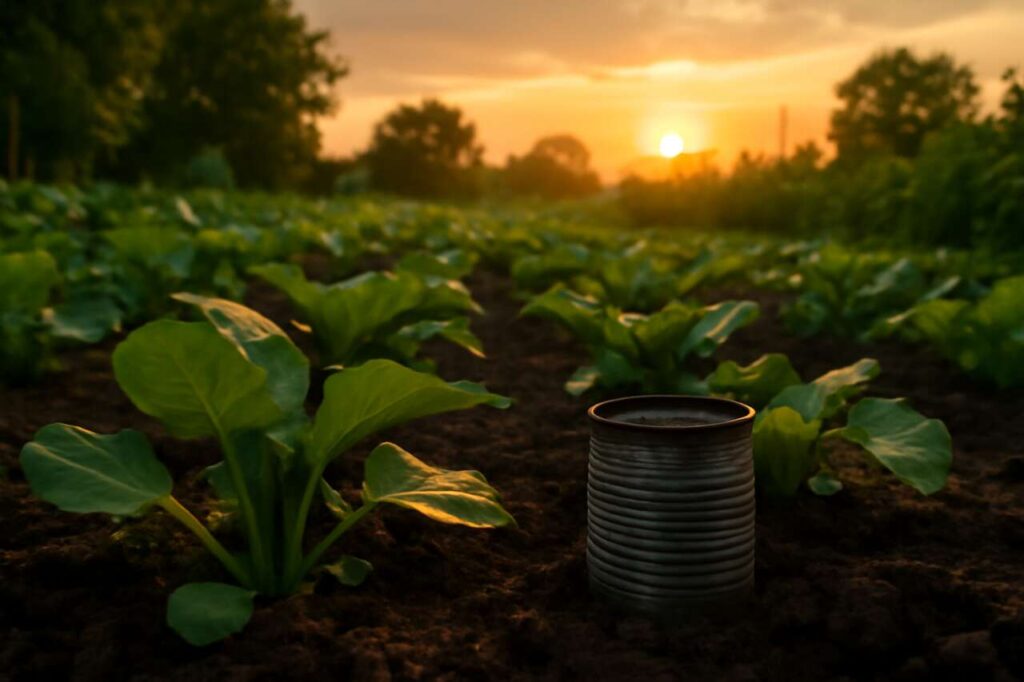
Gardeners constantly seek innovative methods to enhance soil quality, boost plant health, and reduce waste. One surprisingly effective technique involves burying a simple tin can in your vegetable garden. This unconventional practice offers multiple benefits that address common gardening challenges whilst promoting sustainable practices. From improving water distribution to encouraging beneficial organisms, this method transforms ordinary household waste into a valuable gardening tool that supports healthier crops and more productive growing spaces.
Understanding the role of tin cans in the soil
The science behind buried metal containers
Tin cans, when strategically placed beneath the soil surface, create underground reservoirs that fundamentally alter the growing environment. These containers function as micro-ecosystems within the garden bed, influencing water retention, temperature regulation, and nutrient availability. The metal structure provides a stable framework that resists decomposition, ensuring long-term effectiveness throughout multiple growing seasons.
How tin cans interact with soil composition
The presence of buried tin cans affects soil structure in several measurable ways:
- Creating air pockets that prevent compaction in heavy clay soils
- Establishing defined water collection points that reduce runoff
- Providing shelter for beneficial microorganisms and small invertebrates
- Moderating soil temperature fluctuations near plant roots
Research in sustainable agriculture demonstrates that strategic placement of non-decomposing materials can improve overall soil health when implemented correctly. The tin can essentially becomes a permanent fixture that continues delivering benefits season after season.
These foundational benefits naturally lead to one of the most practical advantages for gardeners facing drainage challenges.
Improving drainage in the vegetable garden
Addressing waterlogged soil conditions
Poor drainage represents a significant obstacle for vegetable cultivation, particularly in areas with heavy clay content or compacted earth. Buried tin cans with perforated bottoms create drainage channels that allow excess water to filter away from root zones. This prevents the waterlogging that causes root rot and fungal diseases in tomatoes, peppers, and other susceptible crops.
Installation technique for optimal drainage
To maximise drainage benefits, gardeners should:
- Remove both ends of the tin can to create a hollow cylinder
- Dig holes approximately 30 centimetres deep at strategic points
- Position cans vertically with the top rim slightly below soil level
- Fill the interior with gravel or small stones
- Cover with a layer of landscape fabric before replacing topsoil
| Soil Type | Recommended Can Spacing | Expected Drainage Improvement |
|---|---|---|
| Heavy clay | 60-90 cm apart | 40-60% reduction in standing water |
| Loamy soil | 120-150 cm apart | 20-30% improvement |
| Sandy soil | Not typically needed | Minimal benefit |
Beyond managing excess water, these buried containers also attract organisms that further enhance soil quality.
Attracting earthworms and other natural allies
Creating habitats for beneficial organisms
The sheltered environment inside and around buried tin cans provides ideal conditions for earthworms, ground beetles, and other beneficial creatures. These organisms seek out the stable moisture levels and protection from predators that the cans offer. Earthworms, in particular, congregate near these structures, creating networks of tunnels that aerate the soil and distribute nutrients.
The earthworm advantage
Increased earthworm activity delivers measurable benefits:
- Enhanced soil structure through continuous tunnelling activity
- Improved nutrient cycling as worms process organic matter
- Better water infiltration through established worm channels
- Increased microbial activity in worm castings
Studies indicate that gardens with higher earthworm populations produce vegetables with improved nutritional content and greater resistance to environmental stress. The tin can method essentially creates artificial refuges that support these populations throughout the year.
The same structures that attract beneficial organisms also help regulate another critical factor in plant health.
Maintaining essential moisture near the roots
Water conservation through controlled release
Buried tin cans function as underground reservoirs that capture and slowly release moisture during dry periods. When filled with water directly, they deliver hydration precisely where plants need it most, reducing surface evaporation by up to 70 percent compared to traditional watering methods. This targeted approach proves particularly valuable during summer months when water conservation becomes essential.
Deep watering benefits
This method encourages deeper root development, creating more resilient plants that withstand drought conditions. Vegetables watered through buried cans develop extensive root systems that access nutrients from greater soil depths, resulting in stronger plants with improved yields.
| Watering Method | Water Efficiency | Root Depth Achieved |
|---|---|---|
| Surface watering | 45-55% | 15-20 cm |
| Buried tin can system | 80-90% | 30-40 cm |
| Drip irrigation | 75-85% | 25-35 cm |
This practical application aligns perfectly with broader environmental considerations that concern modern gardeners.
Circular economy: reusing everyday materials
Reducing household waste through garden innovation
The tin can technique exemplifies circular economy principles by transforming waste into valuable resources. Rather than discarding metal containers after single use, gardeners extend their lifecycle indefinitely whilst simultaneously improving growing conditions. This approach reduces landfill contributions and eliminates the need for purchasing specialised gardening equipment.
Environmental impact considerations
Repurposing tin cans delivers quantifiable environmental benefits beyond waste reduction. Manufacturing new metal products requires significant energy input, so extending the useful life of existing materials reduces overall carbon footprint. A single buried tin can potentially prevents the production of multiple plastic plant pots or irrigation components over its functional lifetime.
With the theoretical benefits established, implementing this method requires attention to specific practical details.
Practical tips for integrating tin cans into the garden
Selecting appropriate containers
Not all tin cans suit garden use equally well. Choose containers based on these criteria:
- Larger cans (400g to 800g capacity) provide better water storage
- Remove all labels and adhesive residue completely
- Inspect for rust or damage that might compromise structural integrity
- Ensure edges are smooth to prevent injury during installation
Installation best practices
Successful implementation requires careful planning and proper technique. Install cans before planting to avoid disturbing established root systems. Position them approximately 15 to 20 centimetres from where plants will grow, ensuring roots can access moisture without obstruction. For climbing vegetables like beans or cucumbers, place cans at the base of support structures where water demand peaks during fruiting.
Maintenance and monitoring
Check buried cans periodically to ensure they remain functional. Remove accumulated debris, verify drainage holes remain clear, and assess whether positioning effectively serves nearby plants. Adjust the system as needed based on plant performance and seasonal conditions.
This simple yet effective technique demonstrates how resourceful gardening practices can simultaneously address multiple challenges whilst promoting environmental responsibility. Burying tin cans in vegetable gardens offers proven benefits for drainage, moisture retention, and soil health, all whilst reducing household waste. The method requires minimal investment and delivers lasting improvements that support healthier, more productive growing spaces. By transforming ordinary containers into functional garden infrastructure, this approach exemplifies practical sustainability that any gardener can implement immediately.