


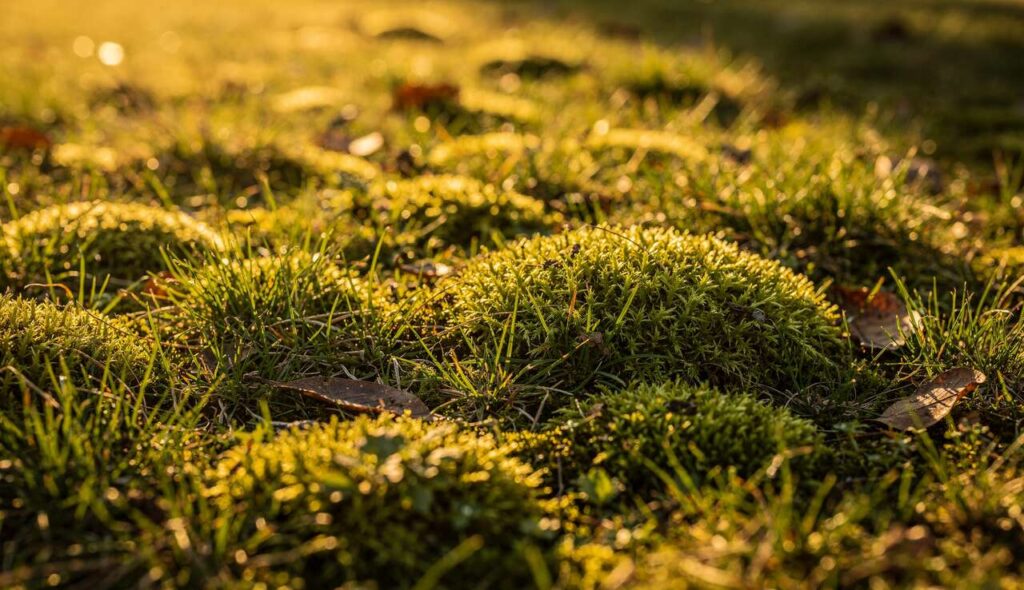
Moss patches spreading across a once-pristine lawn can be a frustrating sight for homeowners and garden enthusiasts alike. This common problem affects countless gardens throughout the country, particularly in areas with damp, shaded conditions. Understanding whether moss removal is necessary and how to tackle this persistent issue requires a comprehensive look at the underlying causes, potential impacts, and effective treatment strategies. Making an informed decision about moss management can significantly improve both the appearance and health of your lawn.
What is moss on the lawn ?
Understanding moss as a plant
Moss is a non-flowering, primitive plant that belongs to the Bryophyta division. Unlike grass, moss lacks a proper root system and instead absorbs water and nutrients directly through its leaves. This simple structure allows moss to thrive in conditions where grass struggles to establish itself. Moss reproduces through spores rather than seeds, which enables it to spread rapidly across lawns when environmental conditions favour its growth.
Common types of lawn moss
Several moss species commonly colonise lawns, each with distinctive characteristics:
- Hypnum cupressiforme: feathery appearance with a golden-green colour
- Brachythecium rutabulum: bright green moss forming dense, rough mats
- Ceratodon purpureus: reddish-brown stems with compact cushions
- Rhytidiadelphus squarrosus: springy texture with distinctive pointed leaves
Identifying the specific moss type can help determine the most appropriate treatment approach. These various species indicate different underlying lawn problems, from poor drainage to excessive shade or compacted soil. Recognising these indicators naturally leads to examining why moss appears in the first place.
The causes of moss appearance
Environmental factors promoting moss growth
Moss thrives in conditions that discourage healthy grass growth. Poor drainage creates waterlogged soil that suffocates grass roots whilst providing the constant moisture moss requires. Shade from trees, buildings, or fences reduces sunlight availability, weakening grass and creating ideal conditions for moss colonisation. Acidic soil with a pH below 6.0 also favours moss development over grass.
Lawn maintenance issues
Inadequate lawn care practices frequently contribute to moss problems:
- Cutting grass too short, which weakens plants and exposes soil
- Soil compaction from heavy foot traffic or machinery
- Insufficient fertilisation leading to nutrient-depleted grass
- Poor aeration preventing oxygen from reaching grass roots
- Inadequate overseeding allowing bare patches to develop
Seasonal patterns
| Season | Moss Activity | Contributing Factors |
|---|---|---|
| Autumn | High growth | Increased rainfall, cooler temperatures |
| Winter | Moderate growth | Wet conditions, dormant grass |
| Spring | Peak spread | Moisture retention, spore dispersal |
| Summer | Reduced activity | Drier conditions, stronger grass growth |
Understanding these cyclical patterns helps determine optimal treatment timing. The relationship between these causes and their consequences on lawn health deserves closer examination.
The impacts of moss on your lawn
Competition with grass
Moss creates a dense mat that prevents grass from establishing and spreading effectively. This ground-covering layer blocks sunlight from reaching grass seedlings and prevents new shoots from emerging. As moss expands, it gradually displaces grass, creating increasingly larger bare patches once the moss dies back during dry periods. The competitive advantage moss holds in unfavourable conditions means grass struggles to recover without intervention.
Visual and aesthetic concerns
A moss-infested lawn presents several aesthetic challenges. The uneven texture and colour variation between moss patches and grass creates an unkempt appearance. Moss often feels spongy underfoot, making the lawn less suitable for recreational activities. During dry spells, moss turns brown and brittle, leaving unsightly dead patches that contrast sharply with surrounding vegetation.
Soil health implications
Whilst moss itself doesn’t directly damage soil, its presence indicates underlying problems that affect soil quality. The conditions favouring moss, such as compaction and poor drainage, restrict beneficial microbial activity and earthworm populations. These issues compound over time, creating a cycle where soil health deteriorates further, making grass establishment increasingly difficult. Addressing these fundamental problems requires weighing the advantages and disadvantages of moss removal.
The benefits and drawbacks of removing moss
Advantages of moss removal
Eliminating moss provides several significant benefits for lawn health and appearance:
- Improved grass growth: removing competition allows grass to establish and spread
- Enhanced drainage: treatment often involves addressing waterlogging issues
- Better nutrient uptake: grass can access fertiliser without moss interference
- Increased usability: firmer, more resilient lawn surface for activities
- Long-term cost savings: healthier lawns require less intensive maintenance
Potential disadvantages
However, moss removal presents certain challenges. The process can be labour-intensive and time-consuming, particularly for extensively affected lawns. Chemical treatments may temporarily harm beneficial soil organisms and require careful application to avoid grass damage. Removing moss without addressing underlying causes results in rapid recolonisation, wasting effort and resources. Some homeowners find the initial appearance after scarification quite stark, with bare soil exposed until grass regrows.
When removal may not be necessary
In certain situations, moss removal might be unnecessary or impractical. Heavily shaded areas where grass will never thrive may benefit from accepting moss as ground cover. Properties with minimal lawn usage might prioritise other garden improvements. Understanding these considerations helps determine whether to proceed with elimination strategies.
Methods to effectively eliminate moss
Manual removal techniques
Physical removal offers an environmentally friendly approach. Scarification using a spring-tined rake vigorously removes moss by pulling it from the soil surface. This method works best on small to medium-sized lawns and provides immediate results. Alternatively, powered scarifiers handle larger areas more efficiently, though they require equipment investment or hire costs.
Chemical treatments
Various moss-killing products deliver effective results:
| Product Type | Active Ingredient | Application Time | Effectiveness |
|---|---|---|---|
| Iron sulphate | Ferrous sulphate | Spring/Autumn | High |
| Lawn sand | Iron sulphate mix | Spring | Moderate |
| Dichlorophen | Fungicide | Any season | Very high |
Apply treatments according to manufacturer instructions, ensuring even coverage. Dead moss turns black within days and requires removal through scarification approximately two weeks after treatment.
Improving growing conditions
Addressing underlying causes proves crucial for lasting moss control. Aerating compacted soil improves drainage and oxygen availability. Applying lime raises soil pH in acidic conditions. Overseeding bare patches with appropriate grass varieties encourages dense turf that resists moss colonisation. These improvements work synergistically with removal methods to create inhospitable conditions for moss. Maintaining these improvements prevents future problems.
Preventing moss from reappearing
Regular lawn maintenance schedule
Establishing a consistent care routine significantly reduces moss recurrence. Mow regularly at the correct height for your grass type, typically leaving blades 2.5 to 4 centimetres long. Apply balanced fertiliser three to four times annually to maintain vigorous grass growth. Aerate annually, particularly on heavy clay soils, to prevent compaction and improve drainage.
Drainage improvements
Persistent waterlogging requires more substantial intervention. Installing drainage systems, creating gentle slopes, or incorporating organic matter into heavy soils addresses moisture retention problems. For severely affected areas, consider raised beds or alternative ground covers better suited to wet conditions.
Managing shade and air circulation
Reducing shade through selective tree pruning allows more sunlight to reach grass. Choose shade-tolerant grass varieties for areas receiving limited sun. Improving air circulation by trimming overhanging branches helps grass dry more quickly after rain or dew, creating less favourable conditions for moss establishment.
Moss on lawns represents a symptom of underlying environmental and maintenance issues rather than a standalone problem. Removing moss delivers clear benefits for lawn health and appearance, but success depends on addressing the root causes that allowed colonisation. Whether through manual removal, chemical treatments, or improved growing conditions, effective moss control requires a comprehensive approach. Regular maintenance, proper drainage, and suitable grass varieties create resilient lawns that naturally resist moss invasion, ensuring long-term results that justify the initial effort invested in treatment and prevention strategies.