



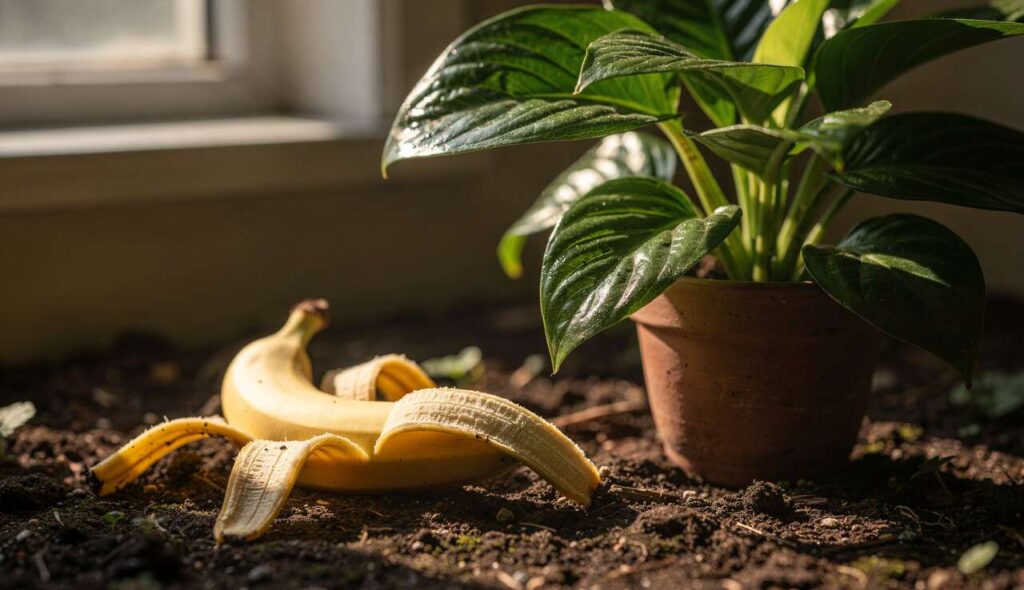
Most gardeners spend considerable sums on commercial fertilisers and plant supplements, yet a powerful natural remedy sits in their kitchen bins every single day. Banana peels, typically discarded without a second thought, contain a remarkable concentration of nutrients that can revive even the most distressed houseplants. This overlooked fruit scrap offers a cost-effective, environmentally friendly solution to common plant problems, from yellowing leaves to stunted growth. Understanding how to harness the potential of this everyday waste product could transform your indoor garden whilst reducing household waste.
Why this peel is valuable for your plants
The mineral composition that makes the difference
Banana peels contain an impressive array of minerals essential for plant health. Potassium, present in significant quantities, plays a crucial role in strengthening plant cell walls, improving disease resistance, and promoting robust root development. Unlike many commercial fertilisers that provide nutrients in synthetic forms, banana peels release their minerals gradually as they decompose, creating a slow-release feeding system that prevents nutrient burn.
The potassium content in banana peels ranges between 40 and 50 per cent of their dry weight, making them particularly valuable for flowering houseplants. This mineral supports the movement of water, nutrients, and carbohydrates throughout plant tissues, directly influencing photosynthesis efficiency and overall vigour.
Additional trace elements for comprehensive nutrition
Beyond potassium, banana peels provide several other vital nutrients:
- Phosphorus for energy transfer and root development
- Calcium to strengthen cell walls and prevent blossom end rot
- Magnesium as a central component of chlorophyll molecules
- Sulphur for protein synthesis and enzyme function
- Small amounts of manganese, sodium, and silica
This mineral profile addresses multiple deficiencies simultaneously, making banana peels particularly effective for plants showing general decline or multiple symptoms of poor nutrition. The organic matter in the peels also improves soil structure, enhancing water retention and aeration around root systems.
The unexpected nutritional benefits
Combating common houseplant deficiencies
Indoor plants frequently suffer from potassium deficiency, which manifests as brown leaf edges, weak stems, and reduced flowering. Traditional potting composts often lack sufficient potassium for long-term plant health, especially as nutrients leach away with regular watering. Banana peels address this deficiency directly, providing a concentrated source of this essential macronutrient.
Plants treated with banana peel preparations typically demonstrate improved stress tolerance, particularly during environmental changes such as heating fluctuations or reduced winter light. The enhanced cellular function resulting from adequate potassium enables plants to regulate water more efficiently, reducing susceptibility to both drought stress and overwatering damage.
Comparative nutritional analysis
| Nutrient | Banana Peel Content | Benefit to Plants |
|---|---|---|
| Potassium | 42-48% dry weight | Flower production, disease resistance |
| Phosphorus | 3-4% dry weight | Root development, energy transfer |
| Calcium | 1-2% dry weight | Cell wall strength, structural integrity |
| Magnesium | 0.5-1% dry weight | Chlorophyll production, photosynthesis |
These percentages represent significantly higher concentrations than most household compost materials, explaining why banana peels produce such noticeable results. The natural balance of nutrients also means plants can selectively absorb what they need without the risk of chemical imbalances common with synthetic fertilisers.
Supporting beneficial soil microorganisms
The organic compounds in banana peels serve as food for beneficial bacteria and fungi in potting soil. These microorganisms break down complex organic matter into simpler forms that plant roots can absorb, whilst simultaneously improving soil structure. A thriving microbial community enhances nutrient cycling and helps suppress harmful pathogens that cause root diseases.
Understanding these nutritional advantages naturally leads to the practical question of how to transform discarded peels into usable plant food.
How to prepare peels for your plants
Dried peel powder method
Creating banana peel powder offers the most concentrated and versatile preparation. Cut fresh peels into strips approximately one centimetre wide and arrange them on a baking tray. Dry them in an oven set to the lowest temperature (around 70-80°C) for two to three hours, or leave them in a warm, dry location for several days until completely brittle. Once dried, grind the peels using a food processor or coffee grinder until they form a fine powder.
This powder can be stored in an airtight container for up to six months without losing potency. The concentrated nature of the powder means a small amount provides substantial nutrition, making it ideal for regular feeding schedules.
Liquid banana peel tea
For immediate application, banana peel tea provides readily available nutrients. Chop two to three banana peels into small pieces and place them in a large jar. Add one litre of water and seal the container. Allow the mixture to steep for 48 to 72 hours at room temperature, then strain out the solid pieces.
The resulting amber liquid contains water-soluble nutrients that plants can absorb quickly through their roots. Dilute this concentrate with equal parts water before application to prevent overwhelming sensitive plants.
Fermented peel solution
Advanced gardeners may prefer fermented banana peel fertiliser, which increases nutrient availability through microbial action. Combine chopped peels with brown sugar in a 3:1 ratio by weight in a container with a loose lid. Allow the mixture to ferment for two to three weeks, stirring occasionally. The resulting liquid, once strained, contains enhanced levels of bioavailable nutrients and beneficial enzymes.
Each preparation method offers distinct advantages depending on your plants’ needs and your available time, but proper application techniques ensure maximum benefit.
The best application methods
Direct soil incorporation
The simplest approach involves burying small pieces of fresh banana peel directly into the potting soil. Dig shallow trenches around the plant’s root zone, approximately five centimetres from the stem, and place peel pieces in these trenches before covering with soil. This method works particularly well for established plants in larger containers.
As the peels decompose over several weeks, they release nutrients gradually whilst improving soil structure. This technique suits plants that prefer consistent, low-level feeding rather than intense nutrient bursts.
Top dressing with dried powder
Sprinkle one to two teaspoons of banana peel powder onto the soil surface around each plant, then water thoroughly to help nutrients penetrate the root zone. This method provides controlled nutrient release over four to six weeks as the powder gradually breaks down with each watering.
Top dressing works exceptionally well for:
- Flowering houseplants requiring potassium for bloom production
- Fast-growing species with high nutrient demands
- Plants recovering from pest damage or disease
- Specimens preparing for their active growing season
Foliar feeding with diluted tea
Pour banana peel tea into a spray bottle and mist plant leaves during early morning or evening hours when stomata are open. This foliar application allows rapid nutrient absorption through leaf surfaces, providing a quick boost to struggling plants. Avoid spraying during intense sunlight, which can cause leaf burn when water droplets act as magnifying lenses.
Foliar feeding complements root applications but should not replace them entirely, as roots remain the primary nutrient absorption pathway for most houseplants.
Compost tea watering
Use diluted banana peel tea as a replacement for regular water every two to three weeks during the growing season. Apply the solution until it drains from the pot’s bottom, ensuring thorough saturation of the root ball. This method delivers consistent nutrition whilst maintaining proper hydration.
Selecting the appropriate application method represents only part of the equation; maximising effectiveness requires attention to timing and complementary practices.
Tips to maximise their effectiveness
Timing applications with growth cycles
Apply banana peel treatments most intensively during plants’ active growing periods, typically spring and summer for most houseplants. Reduce or eliminate applications during dormancy when plants require minimal nutrition. Flowering species benefit from increased potassium just before and during bloom formation, making banana peel preparations particularly valuable at these critical stages.
Monitor your plants’ response to initial applications and adjust frequency accordingly. Most houseplants respond well to banana peel treatments every three to four weeks during active growth.
Combining with other organic amendments
Banana peels provide excellent potassium but contain relatively low nitrogen levels. Enhance their effectiveness by combining them with nitrogen-rich materials such as:
- Coffee grounds for additional nitrogen and acidity
- Crushed eggshells for extra calcium
- Compost for balanced nutrition and beneficial microorganisms
- Worm castings for gentle, complete fertilisation
This complementary approach creates a more balanced nutritional profile that addresses all essential plant needs rather than focusing solely on potassium supplementation.
Maintaining proper pH levels
Banana peels have a slightly acidic pH, which benefits acid-loving plants but may require adjustment for species preferring neutral or alkaline conditions. Test your potting soil pH periodically and add crushed limestone or dolomite if excessive acidity develops. Most houseplants thrive in slightly acidic to neutral conditions (pH 6.0-7.0), which banana peel applications support naturally.
Storing preparations correctly
Refrigerate liquid banana peel tea for up to one week to prevent spoilage. Dried peel powder remains viable at room temperature in sealed containers away from moisture. Fresh peels should be used within a few days or preserved through drying to prevent mould development. Proper storage maintains nutrient integrity and prevents unpleasant odours from decomposing organic matter.
Even with these optimisation strategies, certain common errors can undermine the benefits of banana peel applications.
Common mistakes to avoid with peels
Overfeeding and nutrient toxicity
Excessive banana peel application can cause potassium toxicity, which interferes with calcium and magnesium uptake. Symptoms include leaf tip burn, interveinal chlorosis, and stunted growth. Apply banana peel preparations moderately, following recommended quantities rather than assuming more equals better results.
Young plants and seedlings require particularly cautious treatment, as their developing root systems are sensitive to concentrated nutrients. Reduce application rates by half for juvenile specimens.
Using conventionally grown peels without washing
Conventionally grown bananas often carry pesticide residues on their skins. Thoroughly wash peels under running water before use, or preferably source organic bananas to eliminate chemical contamination concerns. Pesticide residues can harm beneficial soil microorganisms and potentially affect plant health negatively.
Neglecting pest attraction issues
Fresh banana peels can attract fruit flies and fungus gnats when left on soil surfaces. Always bury fresh peel pieces beneath the soil or use dried preparations to minimise pest problems. If using liquid preparations, avoid leaving standing water in saucers, which creates breeding grounds for unwanted insects.
Ignoring plant-specific requirements
Not all houseplants benefit equally from banana peel treatments. Succulents and cacti, adapted to nutrient-poor environments, may suffer from excessive feeding. Research your specific plants’ nutritional needs before implementing banana peel applications, and adjust frequency based on individual species requirements.
Expecting immediate miracles
Banana peels work gradually as organic matter decomposes and releases nutrients. Visible improvements typically appear after three to four weeks of consistent application. Plants suffering from severe deficiencies or other problems require patience and possibly additional interventions beyond banana peel treatments alone.
Banana peels represent a remarkably effective yet underutilised resource for houseplant care. Their rich potassium content addresses common deficiencies whilst improving soil structure and supporting beneficial microorganisms. Whether prepared as dried powder, liquid tea, or incorporated fresh into potting soil, these discarded scraps can revive struggling plants naturally and economically. Success requires understanding proper preparation methods, appropriate application techniques, and avoiding common mistakes such as overfeeding or pest attraction. By transforming kitchen waste into valuable plant nutrition, gardeners simultaneously reduce environmental impact whilst nurturing healthier, more vibrant indoor gardens. The next time you peel a banana, consider the potential sitting in your hand before relegating it to the rubbish bin.