



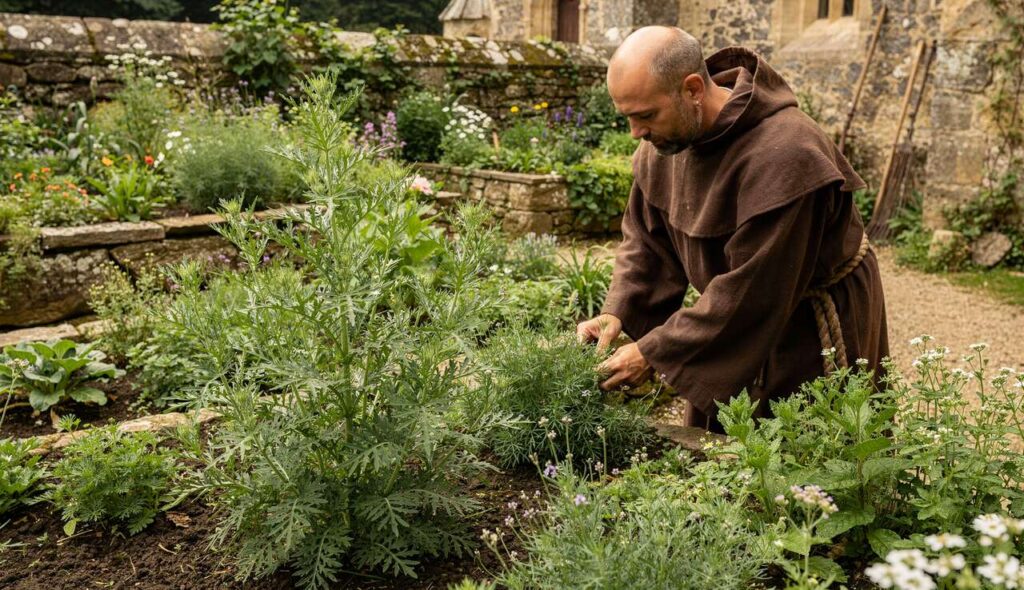
Gardens have long been battlegrounds between cultivators and unwanted visitors. Amongst the arsenal of natural solutions, one plant stands out for its remarkable pest-deterring properties. Mugwort, scientifically known as Artemisia vulgaris, has been employed for centuries as a powerful defence against various garden invaders. This unassuming herb, with its silvery-green foliage and distinctive aroma, offers modern gardeners an eco-friendly alternative to chemical pesticides whilst drawing upon centuries of traditional knowledge.
Historical discovery of mugwort
Ancient origins and early recognition
Mugwort’s history stretches back to ancient civilisations, where it was revered for both medicinal and practical applications. The plant’s genus name, Artemisia, derives from the Greek goddess Artemis, highlighting its sacred status in antiquity. Archaeological evidence suggests that communities across Europe and Asia recognised mugwort’s protective qualities long before written records documented its use.
Spread across continents
As trade routes expanded and cultures intermingled, knowledge of mugwort travelled alongside merchants and scholars. The plant itself proved remarkably adaptable, establishing itself in diverse climates and soil conditions. This widespread distribution facilitated the exchange of information regarding its various applications, including its effectiveness as a natural pest deterrent.
The accumulated wisdom surrounding mugwort eventually reached medieval Europe, where monastic communities would refine and systematise its use. This foundation of historical knowledge provides contemporary gardeners with time-tested methods for managing pest populations.
Mugwort: a natural repellent
How mugwort deters unwanted visitors
Mugwort functions as a repellent through multiple mechanisms that make gardens inhospitable to various pests. The plant’s pungent aroma serves as the primary deterrent, creating an olfactory barrier that many insects find overwhelming. This scent confuses pests’ navigational abilities and masks the attractive odours of nearby crops.
Target pests affected by mugwort
The range of pests discouraged by mugwort is impressively broad:
- Aphids and other sap-sucking insects
- Cabbage moths and their destructive larvae
- Flea beetles that damage brassicas
- Carrot flies seeking root vegetables
- Various species of ants
- Slugs and snails in moderate populations
Comparative effectiveness
| Pest type | Mugwort effectiveness | Duration of protection |
|---|---|---|
| Flying insects | High | Throughout growing season |
| Crawling insects | Moderate to high | Requires regular refreshing |
| Molluscs | Moderate | Most effective when fresh |
Understanding these repellent properties allows gardeners to strategically position mugwort for maximum protective benefit. The scientific basis for these effects lies within the plant’s chemical composition.
The active compounds in mugwort
Essential oils and volatile compounds
Mugwort contains a complex mixture of bioactive compounds responsible for its pest-repelling characteristics. The essential oils present in the leaves and stems include camphor, 1,8-cineole, and various terpenes. These volatile substances evaporate readily, creating an aromatic shield around the plant and neighbouring vegetation.
Bitter principles and their role
Beyond aromatic compounds, mugwort produces bitter substances called sesquiterpene lactones. These chemicals render the plant unpalatable to many herbivorous insects and larger pests. When pests attempt to feed on mugwort or plants treated with mugwort preparations, they encounter an intensely bitter taste that discourages further consumption.
Synergistic effects
The combination of aromatic and bitter compounds creates a multi-layered defence system. Whilst volatile oils repel pests from a distance, the bitter principles provide a secondary deterrent upon contact. This dual-action mechanism explains why mugwort has maintained its reputation as an effective pest control solution across centuries of agricultural practice.
Medieval monks, through careful observation and documentation, became particularly adept at harnessing these natural properties.
The use of mugwort by medieval monks
Monastic gardens and pest management
Medieval monasteries maintained extensive gardens that supplied food, medicine, and materials for daily life. Monks developed sophisticated horticultural techniques, including companion planting strategies featuring mugwort. These religious communities documented their findings in herbals and agricultural treatises, preserving knowledge that might otherwise have been lost.
Practical applications in monastery settings
Monastic gardeners employed mugwort in several ways:
- Planting mugwort borders around vegetable plots
- Creating dried mugwort bundles for storage areas
- Preparing liquid infusions to spray on vulnerable crops
- Incorporating dried leaves into mulch layers
- Hanging fresh sprigs in granaries and food stores
Documentation and knowledge transmission
Monks meticulously recorded their observations regarding mugwort’s effectiveness. These manuscripts noted optimal planting times, preparation methods, and specific pest problems addressed by the herb. The systematic approach taken by monastic communities transformed folk knowledge into reproducible techniques that spread throughout medieval Europe.
Modern scientific research has validated many of these traditional practices, confirming the genuine effectiveness that monks observed centuries ago.
Effectiveness of mugwort against pests
Contemporary research findings
Recent studies have examined mugwort’s pest-repelling properties using controlled experimental conditions. Research confirms that mugwort extracts demonstrate significant repellent activity against numerous agricultural pests. Laboratory tests show that volatile compounds from mugwort reduce pest landing rates and feeding behaviour compared to untreated control plants.
Field trial results
Practical field applications yield encouraging outcomes. Gardens incorporating mugwort as a companion plant experience measurably reduced pest damage. Effectiveness varies depending on factors such as plant density, pest pressure, and environmental conditions, but overall trends indicate substantial protective benefits.
Limitations and realistic expectations
Whilst highly effective, mugwort is not a complete solution for all pest problems. Heavy infestations may require additional interventions, and some pest species show greater resistance to mugwort’s deterrent effects. The plant works best as part of an integrated pest management strategy rather than as a sole control method.
For those inspired to harness mugwort’s protective properties, cultivating this resilient herb proves remarkably straightforward.
Growing mugwort in your garden
Site selection and soil requirements
Mugwort thrives in various conditions but performs optimally in well-drained soil with full sun to partial shade. The plant tolerates poor soils and requires minimal fertilisation, making it suitable for challenging garden areas. However, gardeners should note that mugwort can become invasive if not properly managed.
Planting and establishment
Mugwort propagates readily through several methods:
- Direct sowing of seeds in spring
- Division of established clumps
- Root cuttings taken in autumn
- Transplanting of young seedlings
Space plants approximately 60 centimetres apart to allow adequate air circulation. Once established, mugwort requires minimal maintenance and tolerates drought conditions well.
Containment strategies
To prevent unwanted spreading, consider these containment approaches:
- Planting in buried containers or raised beds
- Regular removal of flower heads before seed formation
- Installing root barriers around planting areas
- Monitoring for and removing adventitious shoots
Harvesting and preparation
Harvest mugwort leaves just before flowering when essential oil content peaks. Dry leaves thoroughly in a well-ventilated area away from direct sunlight. Store dried material in airtight containers for use throughout the year. Fresh or dried leaves can be made into sprays by steeping in hot water, straining, and applying to affected plants.
Mugwort represents a bridge between historical wisdom and contemporary sustainable gardening practices. This remarkable plant, trusted by medieval monks for its protective qualities, continues to offer modern gardeners an effective, environmentally responsible approach to pest management. Its ease of cultivation, combined with proven repellent properties, makes mugwort a valuable addition to any garden seeking natural solutions. By incorporating this time-tested herb into planting schemes, gardeners honour centuries of accumulated knowledge whilst creating healthier, more balanced growing environments.